
Bella Ramsey’s Had Enough: Why “You Don’t Have to Watch” Hits So Hard
For more than a decade, The Last of Us has inspired passionate debate. First it was the 2013 game’s ending. Then it was the 2020 sequel’s big narrative swings. Now, with HBO’s adaptation pushing further into that same territory, the arguments have come roaring back.
Caught right in the middle of all this is Bella Ramsey.
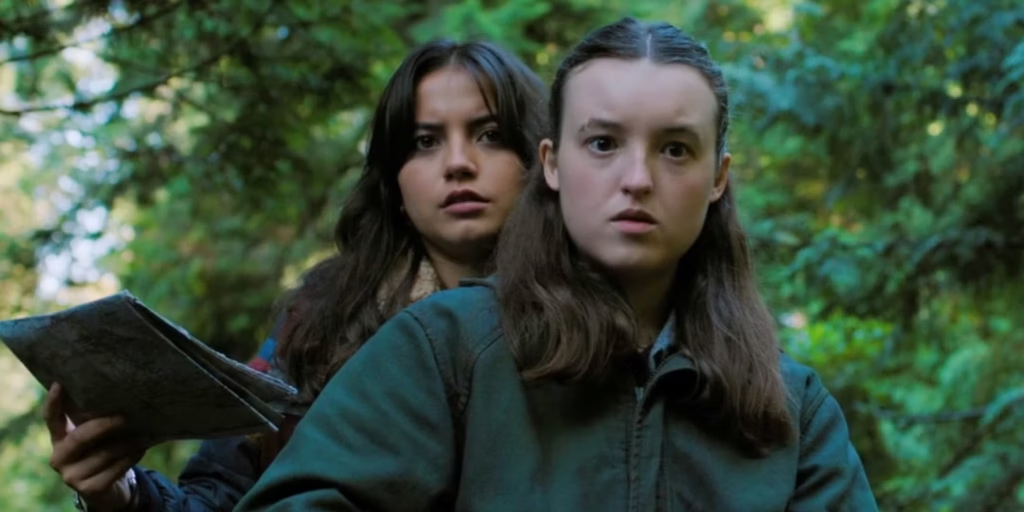
In recent months, one line has been passed around fandom spaces as a kind of summary of their stance toward haters:
“If you hate it that much, the game exists. You can just play the game again… You don’t have to watch Season 3.”
Whether or not that exact sentence ever appears verbatim in an interview, it perfectly captures a position Ramsey has been laying out, piece by piece, in real conversations since early 2023. They have been remarkably clear: queer characters are not going anywhere, the creative team will tell the story they believe in, and nobody is required to tune in if that upsets them.
For TheLastOfUs.tv readers, it is worth looking closely at how we got here, what Ramsey has actually said on the record, and why this particular message landed with such force.
The Real Quotes Behind the “You Don’t Have to Watch” Attitude
The “you don’t have to watch” idea is not a random clapback invented for social media. It grows out of several interviews where Ramsey discussed backlash, representation, and fan expectations.
In early 2023, while Season 1 was still airing, Ramsey spoke to GQ about people already angry about the inclusion of queer and trans characters in The Last of Us Part II, which Season 2 and beyond are set to adapt. They did not seem especially worried. They said they knew some viewers would “think what they want to think,” but added that those people were simply going to “have to get used to it.”
Around the same time, in another interview that quickly circulated, Ramsey addressed potential viewers turned off by gay storylines and by the presence of a trans character in the game’s sequel. Their answer was blunt. If you do not want to watch the show because of that, they said, “that’s on you, and you’re missing out.”
Storm Reid, who plays Riley in the “Left Behind” episode, backed that mindset publicly. Speaking to Variety about the homophobic reaction to Ellie and Riley’s relationship, Reid said audiences uncomfortable with seeing queer love stories on screen should simply not watch, rather than trying to shout them down. She paraphrased Ramsey’s take approvingly: “If you don’t like it, don’t watch.”
Taken together, those comments lay the groundwork for the sharper fan shorthand we see now. Ramsey has consistently framed inclusion as non‑negotiable and treated viewership as a choice, not a hostage situation. If someone really cannot stand the story being told, their solution is simple: step away.
A Backlash Years in the Making
To understand why that stance matters, it helps to remember just how long The Last of Us has sat at the center of culture‑war arguments.
When The Last of Us Part II released in June 2020, critics largely loved it. Review aggregators recorded scores in the 90s from professional outlets. Neil Druckmann and his team were praised for ambitious storytelling, technical achievement, and emotional gut punches.
User scores told a different story, at least in the early weeks. On platforms like Metacritic, thousands of negative user reviews poured in within hours of release. Many came too fast for players to have finished the 20‑plus hour campaign. The text of those reviews did not only complain about pacing or structure. A significant chunk attacked the game’s treatment of Joel, the prominence of Abby, and the central role of queer and trans characters like Ellie, Dina, and Lev.
The pattern repeated when HBO’s adaptation arrived.
Season 1’s third episode, “Long, Long Time,” centered the decades‑long relationship between Bill and Frank. Critics almost unanimously praised it as one of the strongest hours of television that year. Yet on open‑rating sites, the episode was immediately review‑bombed by users angry that the show spent an hour on a gay couple.
Episode 7, “Left Behind,” which focused on Ellie and Riley’s relationship in a Boston mall, drew a similar split. Reviewers highlighted the performances and emotional payoff. A vocal minority of users slammed it as “filler” or “agenda,” even though the DLC story had been part of the franchise canon since 2014.
This is the environment Ramsey has been navigating since they signed on. Every casting photo, storyline hint, or press quote about Season 2 and beyond sits in the shadow of that history. When they say that people who cannot handle queer characters are “missing out,” they are not speaking in the abstract. They are talking directly to a pattern of hostility that has followed this series for years.
The Show Is Still a Giant Hit, With or Without the Haters
Another important piece of context: despite the online noise, The Last of Us is not struggling for attention.
Season 1, which aired on HBO from January to March 2023, quickly became one of the network’s biggest hits of the decade.
- The premiere drew roughly 4.7 million viewers in the United States across HBO and streaming on its first night.
- By episode 2, that number had climbed to around 5.7 million, one of the largest second‑week jumps in HBO history.
- When the finale aired, same‑day viewership hit more than 8 million, and HBO later reported that episodes were averaging over 30 million viewers across platforms.
The network renewed the show for Season 2 after only two episodes had aired. HBO executives described it as their second‑biggest launch of the streaming era, behind only House of the Dragon.
Production budgets reflected that confidence. Trade reports put Season 1’s cost at well over $10 million per episode, placing it among the most expensive series HBO has ever produced. Yet the investment clearly paid off in subscribers, buzz, and awards.
The show received widespread critical acclaim. It picked up major Emmy nominations, including Outstanding Drama Series and acting nods for Pedro Pascal and Bella Ramsey. Craft categories recognized its visual effects, score, makeup, and production design.
So when Ramsey shrugs off haters and says, in effect, “you don’t have to watch,” there is solid evidence behind it. The series is not going to live or die based on a subset of viewers threatening to quit over queer kisses or narrative choices. HBO has the ratings and the prestige to keep backing the creative team.
Bella Ramsey’s Boundaries With Fandom
It is also important to remember that Ramsey is not just a character on a screen. They are a 20‑something actor who has had to grow up under intense scrutiny.
From the moment their casting was announced, a wave of criticism rolled in. Some complained that Ramsey did not “look enough like” Ellie from the games. Others made outright cruel remarks about their face and body. The conversation frequently veered away from performance and straight into bullying.
Ramsey has talked publicly about what that felt like and how they responded. In interviews after Season 1, they described deleting social‑media apps from their phone and largely stepping away from reading online comments. It was not a dramatic exit. It was a simple protective measure. Without a constant feed of strangers’ opinions, they said, they were “fine.”
In 2023, Ramsey also shared that they identify as nonbinary or gender fluid and are comfortable with both “they” and “she” pronouns. That disclosure, which came in an interview with The New York Times, brought another round of discourse and spotlight.
Later, in a separate conversation, Ramsey revealed they had received an autism diagnosis. They described the label as “freeing” and said it helped them understand their sensory experiences and reactions on set. Long night shoots, loud environments, and emotional scenes all hit differently when you can put a name to how your brain processes them.
Seen through that lens, the firm line of “you don’t have to watch” reads less like contempt for viewers and more like a boundary. Ramsey is drawing a clear circle around what is and is not their responsibility. They can play Ellie with everything they have. They can help promote the show. They cannot, and will not, carry the emotional load of every stranger who decides this story should not exist.
Why “You Don’t Have to Watch” Matters in Modern Fandom
There is another reason this message hit a nerve: it pushes against a very common fan expectation.
In the age of massive franchises, some viewers have started to treat stories like subscription services. They pay with time, attention, or money, and in return they expect the narrative they have in their heads. When creators deviate from that mental blueprint, a portion of the audience does not just feel disappointed. They feel cheated.
That sense of ownership has fueled controversies across pop culture, from Star Wars sequels to superhero films. The Last of Us is no exception, especially once the story moves beyond the relatively contained arc of the first game.
By the time HBO reaches the events of Part II, it will be treading on some of the most divisive territory in modern gaming. Joel’s fate, Abby’s role, Ellie’s quest for revenge, the prominence of queer and trans characters, and the bleakness of certain endings have all sparked fierce argument.
In that context, “you don’t have to watch” is almost a radical statement. It reminds people that they are not shareholders in this story. They are members of an audience. Being in that audience is entirely voluntary.
That does not mean criticism is unwelcome or worthless. Thoughtful critiques, including from fans, can deepen how we understand a show. They can highlight pacing issues, representation gaps, or adaptation choices that deserve discussion. But Ramsey’s line draws a sharp distinction between engaged criticism and an expectation that angry viewers should be able to veto the existence of certain plots or characters.
Looking Ahead to the Adaptation of Part II
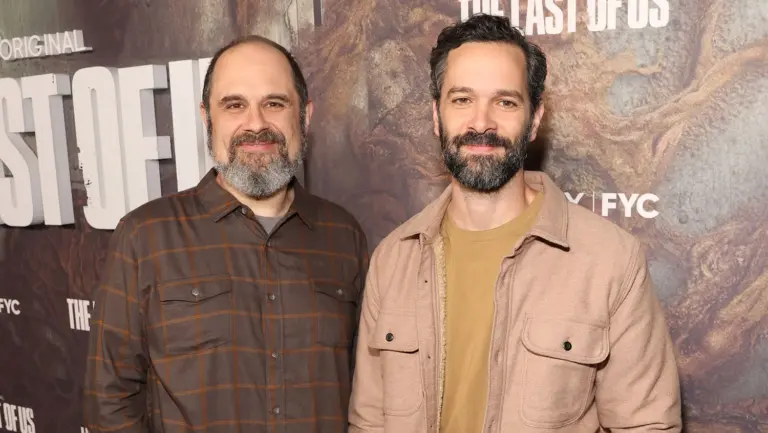
Even before cameras rolled on Season 2, the show’s creators made clear that The Last of Us Part II would not fit neatly into a single batch of episodes. Craig Mazin and Neil Druckmann repeatedly said the sequel’s story is too sprawling and structurally complex to compress into one season. That alone tells us the adaptation will take its time with Abby, with Ellie’s spiral, and with the wider cast of characters in Seattle and beyond.
Those choices will inevitably amplify existing tensions.
Some fans want a near shot‑for‑shot recreation of the game. Others are open to restructuring, as long as the emotional core remains. A smaller, but very loud, group insists the story should be rewritten to spare certain characters or to downplay queer relationships.
Ramsey’s stance effectively answers that last demand in advance. The game already exists. If someone only ever wants to experience that version of events, they can. They can replay the PlayStation original or its remaster as many times as they like. They can ignore HBO entirely.
The show, on the other hand, will be its own thing. It will reflect the priorities of Mazin, Druckmann, the writers’ room, and the cast. It will adjust pacing for television, flesh out side characters who only got a few scenes in the game, and perhaps re‑sequence certain events. There is no universe where it becomes a custom‑built corrective for people still furious about 2020.
What Happens Next
For our corner of the fandom, that leaves a clear path forward.
If you love this world and these characters, there is room for deep, sometimes uncomfortable conversation about where the story goes. There is room to debate performances, adaptation choices, and even whether certain decisions land as powerfully on screen as they did with a controller in your hands.
What there is not, at least in Bella Ramsey’s view, is any obligation for the show to contort itself to appease those who want queer characters hidden, women punished for agency, or beloved men protected from consequence.
The original games remain right there on the shelf. The HBO series is walking its own road.
And if some people truly “hate it that much”?
They do not have to watch. The rest of us will be here, controller down, eyes up, ready to see where Ellie goes next.