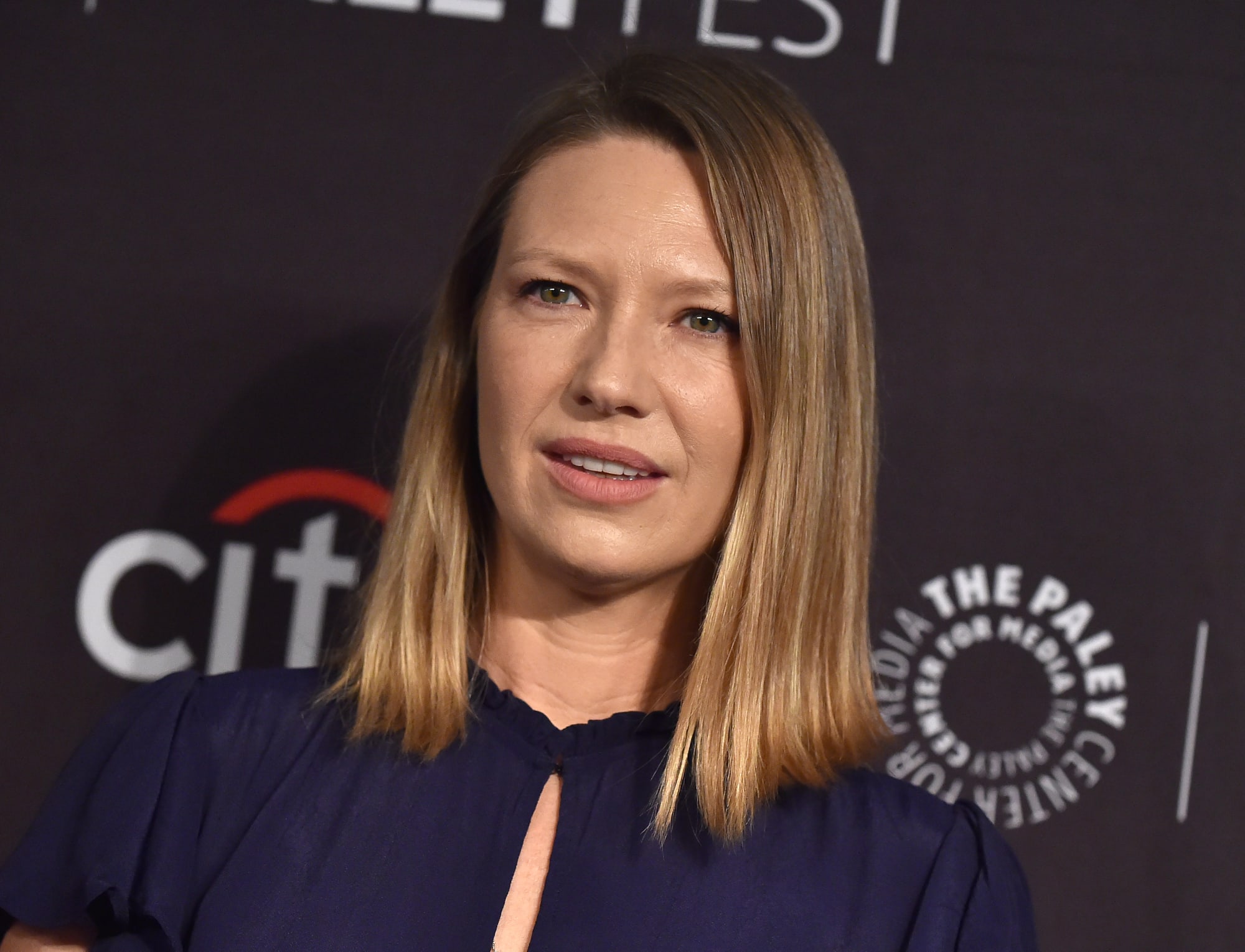

Anna Torv only appears in two episodes of HBO’s The Last of Us. Yet her version of Tess left a mark big enough to earn an Emmy nomination, a wave of critical praise, and a flood of fan grief.
For longtime sci‑fi viewers, that impact did not come out of nowhere. Torv spent five seasons on Fox’s Fringe playing not just one version of FBI agent Olivia Dunham, but several. She juggled a prime‑universe Olivia, her more relaxed “Fauxlivia” counterpart, future dystopian incarnations and even, briefly, the consciousness of another character entirely.
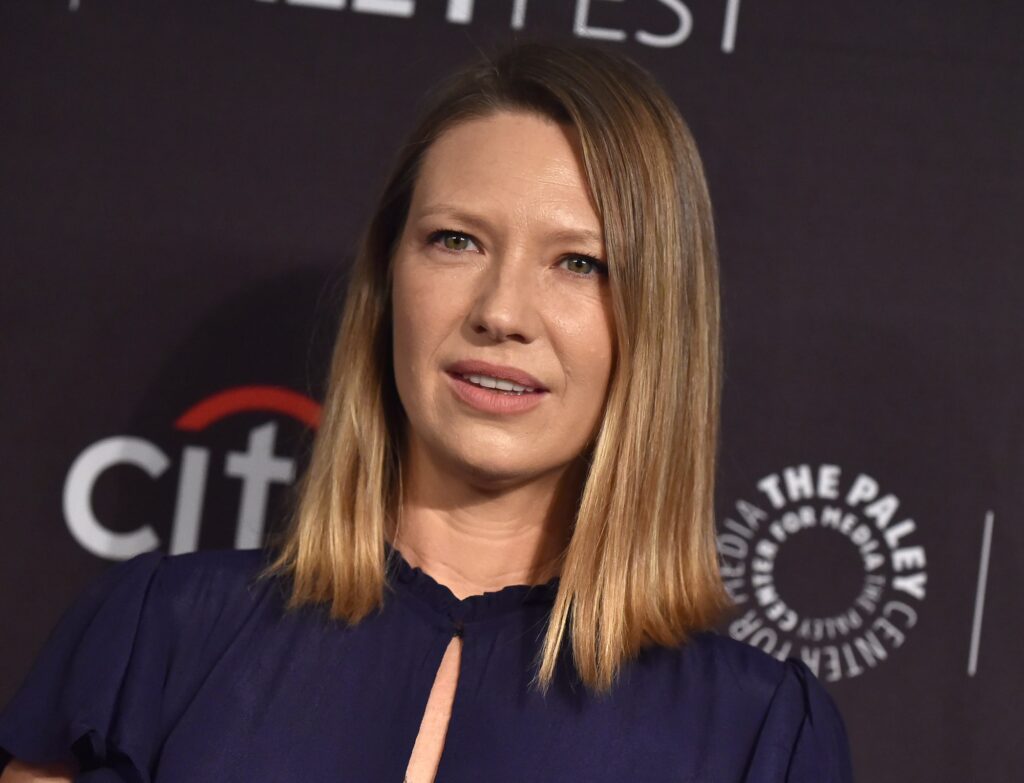
Between 2010 and 2013, that work brought her four consecutive Saturn Awards for Best Actress on Television, a record for any performer at those awards. In Australia, she has now paired that sci‑fi streak with two AACTA Awards for The Newsreader, plus more nominations for recent dramas Force of Nature: The Dry 2 and Territory.
Taken together, Torv’s career looks less like a series of disconnected jobs and more like training. Fringe asked her to imagine collapsing universes and authoritarian futures. The Last of Us then handed her Tess, a woman who has already survived one apocalypse and is quietly waiting for her number to come up.
And somewhere in the background sits a surprising footnote: Torv’s extended family link to Rupert Murdoch, the media dynasty that inspired Succession, even as she has distanced herself from that side of her life.
From the Gold Coast to genre mainstay
Anna Torv was born on 7 June 1979 in Melbourne and grew up mainly on Queensland’s Gold Coast after moving there with her mother and brother at age six. She attended All Saints Anglican School and later Benowa State High School, graduating in 1996, before training at Sydney’s National Institute of Dramatic Art (NIDA). She completed her performing arts degree in 2001.
Early in her career she worked regularly in Australia. In 2003 she played Ophelia in Bell Shakespeare’s production of Hamlet. Television followed with roles in Young Lions, White Collar Blue, McLeod’s Daughters and a longer stint as Nikki Martel on The Secret Life of Us in 2004 — 2005.
Her first big international break arrived through video games. In 2007, she provided both voice and motion capture for Nariko in the PlayStation title Heavenly Sword, returning to the role for the 2014 animated film. In 2010 she appeared in HBO’s World War II miniseries The Pacific as actor Virginia Grey.
By that point, however, Fringe was already turning her into a genre fixture.
Four Saturn Awards and a multiverse of Olivias
Fringe premiered on Fox on 9 September 2008 and ran until 18 January 2013, wrapping after 100 episodes. The series followed FBI agent Olivia Dunham, scientist Walter Bishop and his son Peter as they investigated “fringe” phenomena that gradually tied into a war between parallel universes.
Torv’s workload on the show was unusually complex. She played:
- Olivia Dunham, the prime‑universe FBI agent given abilities by childhood Cortexiphan experiments.
- “Fauxlivia,” her counterpart from the parallel universe, who is quicker to smile and far more relaxed.
- Olivia impersonating Fauxlivia, and later Fauxlivia impersonating Olivia, during an extended identity‑swap arc.
- A hardened future Olivia in 2036 under Observer occupation.
- Briefly, an incarnation of William Bell’s consciousness.
In interviews during Season 3, Torv talked about the puzzle this created. She told Collider that she might be playing “our Olivia thinking that she’s the [alternate] Olivia, then the Ultimate Olivia pretending to be our Olivia,” and described “working that line” as tough but rewarding. It forced her to step back and look at who Olivia was at her core.
She has also said Olivia’s main struggle is a crushing sense of responsibility. Speaking to Blogcritics, Torv described a woman who feels responsible “for everything and for everyone” and struggles to let go. That weight shaped how cold or distant the character sometimes appeared.
Critics eventually caught up with what she was doing. Early on, some viewers complained that Olivia seemed flat. A Los Angeles Times piece about Torv’s second Saturn win in 2011 noted that she had “really made [Season 3] her own” by playing “two uniquely different versions of the same character,” and reported that her reserve in earlier seasons had been a conscious decision by Torv and the writers.
The Saturn Awards recognized that craft four years straight. Records from the awards list her as Best Actress on Television in 2010, 2011, 2012 and 2013, all for Fringe. Her biography emphasizes that this four‑peat is a record for any performer in that category.
Those years effectively put Torv through a long‑form acting experiment: what happens when the same person faces different histories, different traumas and, eventually, a ruined future?
Training for the end of the world
While Fringe never dealt with fungi or cordyceps, its settings often looked a lot like the world of The Last of Us.
From late Season 2 into Season 3, the series spent considerable time in the alternate universe. That world is scarred by environmental catastrophes and “soft spots” in reality. Authorities respond with “ambering,” sealing damaged areas inside a solid amber‑like substance to prevent further breaches. Entire buses, trains and city blocks vanish behind this material, trapping civilians inside.
Torv’s alternate Olivia grows up inside that reality. She works for a militarized Fringe Division that carries out these extreme containment measures and lives in a New York stamped by constant threat. The show introduces black‑market “amber gypsies” who illegally extract bodies from the amber for profit, adding another layer of grim survival.
Later, in Season 5, Fringe jumps forward to 2036. In that timeline the Observers, once mysterious time‑traveling onlookers, have taken over Earth as occupying rulers. Air quality has plummeted. Human resistance groups operate out of ruined cityscapes. The original Fringe team is freed from amber after twenty years and joins the underground fight.
In that future, Olivia is a battle‑worn resistance fighter. She and Peter have a daughter, Etta, who is later captured and killed by the Observers. Torv had to play a woman functioning under occupation while carrying the grief of losing a child to a brutal regime.
These arcs demanded the same emotional muscles that The Last of Us would later need from her. She was already used to moving through devastated city streets, balancing procedural urgency with long‑simmering trauma, and playing a character who keeps moving not because she believes she will be happy, but because there is work to do.
In other words, by the time HBO called, Torv had already spent years imagining how a person like Tess might carry herself.
Tess on HBO: a survivor who wants her death to matter
HBO announced Torv’s casting as Tess in July 2021. Official descriptions framed Tess as “a smuggler and hardened survivor in a post‑pandemic world,” working alongside Pedro Pascal’s Joel.
The series premiered on 15 January 2023 on HBO and Max. The first episode drew 4.7 million viewers in the United States on its first night, making it the network’s second‑biggest debut since 2010. By May 2023, HBO reported that Season 1 was averaging nearly 32 million viewers per episode, the largest audience ever for a debut season on the network.
Tess’s arc in the show closely follows the 2013 game but with specific changes. In both versions she and Joel run a smuggling operation out of Boston’s quarantine zone. Both decide to escort Ellie out of the city for the Fireflies. And in both, Tess is bitten, reveals her infection and sacrifices herself so Joel and Ellie can escape.
The TV series, however, changes the manner of that final stand. In episode 2, “Infected,” Tess discovers her bite inside Boston’s State House. She drenches the building in gasoline and scatters grenades, then insists Joel take Ellie and leave. A horde of infected converges. One approaches Tess and delivers a disturbing, tendril‑filled “kiss” as she struggles to ignite her lighter. Finally, she succeeds, blowing up the building and buying Joel and Ellie time.
“Infected” drew 5.7 million U.S. viewers on its first night, a 22% jump from the premiere. HBO noted it as the largest week‑two growth for a new drama in the network’s history at that time. Rotten Tomatoes’ episode summary singled out Torv, praising “a terrific turn by Anna Torv” alongside the episode’s horror set pieces.
Speaking to TVLine around the episode’s release, Torv called Tess and Joel “just broken.” She pointed out that they are “20 years in, and they’re on the run, and neither of them have been bit,” which creates a constant sense that “when is my time up?” For Tess, the bite finally answers that question.
Torv stressed that Tess wants meaning from that answer. In the same interview, she said Tess’s last stand is driven by the hope that “my life can be worth it… Can we just for once go, ‘Maybe, maybe, maybe?’” That line ties directly into her decision to believe in Ellie’s immunity, even with thin evidence.
A separate conversation with Entertainment Tonight filled in the relationship context. Torv said she and Pedro Pascal played Joel and Tess as partners and lovers who have been together “for quite a long time, like years and years and years,” but who live in a world that allows little overt affection. The shared history is there; it just sits mainly in what they do not say.
The infamous “kiss” sequence, meanwhile, turned audiences’ stomachs. Torv later told GameSpot she found it “revolting” and had imagined the scene differently when she first read it. She clarified that while the actor in prosthetics was on set with her, the cordyceps tendrils entering Tess’s mouth were added with visual effects.
Showrunners Craig Mazin and Neil Druckmann revealed another detail after the season finished: an unshot backstory in which Tess had a husband and son who were infected early in the outbreak. In their account, Tess killed her husband but could not bring herself to kill her son, locking him in a basement instead. That material never made it to screen, but it matches Torv’s emphasis on Tess’s yearning for atonement.
The performance quickly drew notice. TVLine gave Torv an “Honorable Mention” for the week, praising how she “razed” Tess’s emotional walls in the State House confession. The Manual described an “incredible five minutes of acting” once Tess reveals her bite, arguing that Torv made viewers deeply care about a character they had only watched for an episode and a half. Not all reactions were positive; sites like Geeks + Gamers criticized the episode as “entirely broken” and dismissed the performances. Even so, the broader response was strong enough to carry through awards season.
In 2024, Torv received a Primetime Emmy nomination for Outstanding Guest Actress in a Drama Series for Tess. She also picked up several online and critics’ nominations, including at the Online Film & Television Association and the International Online Cinema Awards, plus an MTV Movie & TV Awards nod for Best Kiss.
For fans of Fringe, it all felt oddly familiar. Once again, Torv played a woman carrying the weight of other people’s survival in a world that has already ended once.
AACTAs, The Newsreader, Territory and a crowded trophy shelf
If Fringe and The Last of Us built Torv’s profile with genre audiences, her 2020s work in Australia has cemented her status at home.
In 2016 she starred as journalist Harriet Dunkley in political thriller Secret City, a performance that earned her the 2017 Logie Award for Most Outstanding Actress. Then in 2021 she took on another media role as news anchor Helen Norville in ABC’s The Newsreader, created by Michael Lucas.
Set in a 1980s Australian newsroom, The Newsreader premiered on 15 August 2021. At the 2021 AACTA Awards, it won Best Drama Series. Torv won Best Lead Actress in a Drama for playing Helen, who battles sexism, public scrutiny and the demands of live television. She also picked up a 2022 Logie Award for Most Outstanding Actress for the series.
The show’s success continued. A second season again won Best Drama Series at the 2024 AACTA Awards. Torv “went back‑to‑back” with a second AACTA for Best Lead Actress in a Drama. By early 2025, the series had finished a third and final season, and it went into the 2026 AACTAs with 12 nominations across drama and acting categories.
Between The Newsreader and the outback neo‑Western Territory, Torv has stayed close to high‑pressure, morally complex stories. Territory, released globally on Netflix on 24 October 2024, follows warring factions over the world’s largest cattle station. Torv plays Emily Lawson, leading a cast against vast Northern Territory and South Australian landscapes. The production was the largest TV shoot ever staged in the Northern Territory and briefly reached number two on Netflix’s Global Top 10 English TV list, with 6.4 million views in its first four days and Top 10 placement in 74 countries.
Critics responded well. As of late 2025, Territory holds an 87% approval rating on Rotten Tomatoes and a Metacritic score of 71, with reviewers praising the cast and its sense of place. Netflix still cancelled the show after one season in early 2025, citing production complexity and delays. Even so, Torv’s performance earned her a 2025 AACTA nomination for Best Lead Actress in a Television Drama and a Logie nomination for Best Lead Actress in a Drama.
On the film side, she also plays Alice Russell in Force of Nature: The Dry 2, which premiered in Melbourne on 21 January 2024 and opened in Australian cinemas on 8 February 2024. By late 2025 her awards profile includes a 2025 AACTA nomination for Best Actress in a Leading Role for that film.
Stack these alongside her four Saturn Awards and Emmy nomination, and you get an unusually broad awards résumé. Torv is one of the few performers whose shelf now holds honors from U.S. sci‑fi circles, the Television Academy and Australia’s top screen bodies.
Murdoch connections, media empires and playing journalists
One detail about Torv still surprises some viewers. Her paternal aunt, Anna Maria dePeyster (née Torv), is a journalist and novelist who became Rupert Murdoch’s second wife in 1967. During their marriage she served as a director at News Corp and had three children with Murdoch: Elisabeth, Lachlan and James. They divorced in 1999 after more than 30 years.
That family tree makes Anna Torv first cousin to Elisabeth, Lachlan and James Murdoch. For a time, Rupert Murdoch was effectively her uncle by marriage. It is a genuine connection to one of the most powerful families in global media.
Torv herself has repeatedly pushed back on this detail being used as a shorthand for her career. Outlets have quoted her saying, “I hate that that even comes up,” and noting that she has been estranged from her father since she was eight. She has said she has “nothing to do with the Murdochs,” emphasizing distance rather than insider closeness.
The irony is hard to miss. An actor who has played a crusading journalist in Secret City, a fragile star newsreader in The Newsreader, and a resistance fighter in multiple collapsed futures also happens to be related, on paper, to the family that inspired Succession. Yet her professional record, built in Australia, science‑fiction network TV and a prestige horror series about the end of civilization, shows little sign of dynastic advantage.
In practical terms, the Murdoch link is more trivia than leverage. It does, however, add another layer to how audiences read her journalism roles and her recurring interest in stories about power, information and survival.
What Happens Next for Torv and Tess’s legacy
As of December 2025, The Last of Us has completed two seasons on HBO and Max. The series holds a 94% critics’ score on Rotten Tomatoes across both seasons, with Season 1 alone rated at 96%. Season 2, which premiered on 13 April 2025, opened to 5.3 million first‑night viewers in the U.S. and is averaging around 37 million viewers per episode globally.
Torv’s Tess is long gone from the story’s present timeline. Yet her influence lingers in the way fans talk about Joel’s choices and Ellie’s survival. Tess is the first adult who looks at Ellie’s bite, looks at the world outside the QZ, and decides that risking everything might finally be worth it.
If Fringe was Torv’s rehearsal for that moment, it was a long one. On that show she spent five years exploring how people bend under the weight of impossible responsibility, how they react to occupied futures and ruined cities, and how different versions of the same person might respond to those pressures.
By the time she walked onto The Last of Us set in Calgary, she knew how to play someone who has already lost more than she can say, yet still picks a side. The four Saturn Awards on her shelf, the AACTAs for The Newsreader, the Emmy nomination for Tess and the cluster of recent Australian nominations are all mile markers on that road.
For The Last of Us fandom, that context changes how Tess’s short screentime reads. She is not just a plot device that moves Joel and Ellie out of Boston. She is the culmination of a decade and a half of work in parallel universes, political thrillers and burned‑out futures, distilled into one woman who decides her final act will mean something.
Whether HBO ever brings Torv back in a flashback or companion story is an open question. What is clear, looking at the roles she has taken since Fringe, is that she will likely keep gravitating toward characters who live at the edge of collapse, whether in a newsroom, a cattle station or a ruined city.
For viewers of The Last of Us, that makes Tess feel less like a supporting player and more like a veteran survivor walking in from another universe, ready for one last run.