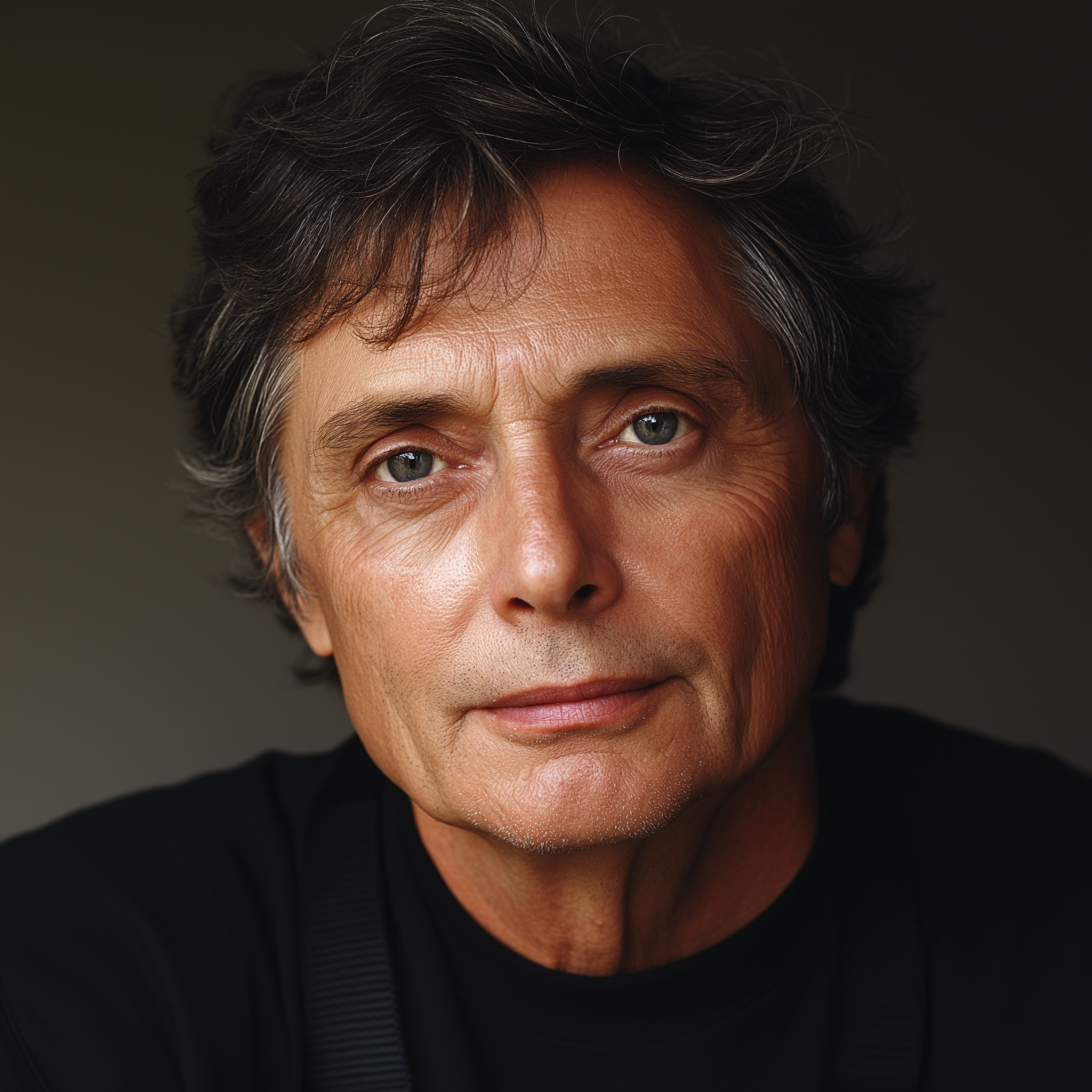
When Craig Mazin talks about The Last of Us, he rarely frames it as a show that “keeps going.” He frames it as a story that has to land. That mindset is showing up again as HBO moves into Season 3 planning, even as the series undergoes a major behind-the-scenes shift.
Over the past year of reporting around Season 2 and the early renewal for Season 3, Mazin has repeatedly returned to a simple premise: structure matters, and every episode has to count. In one of the most revealing quotes attached to Season 2’s shorter run, he argued the seven-episode season wasn’t a slimming down. It was a concentration.
He described the episodes as “high-calorie” and “dense,” and promised viewers: “You will not be bored.” (Variety, via Entertainment Weekly, as published by Variety Australia)
That line has become a kind of mission statement for how he’s approaching the series’ midgame. It also sets up the core Season 3 question: if Season 2 was intentionally compressed, how do you expand Season 3 without adding “filler”?
So far, the public record suggests Mazin’s answer is not “more.” It’s “more, but mapped.”
HBO’s early Season 3 renewal signaled confidence in a multi-season structure
HBO renewed The Last of Us for Season 3 on April 9, 2025, days before Season 2 premiered. TVLine and Entertainment Weekly both reported the renewal date and the timing. That kind of early greenlight matters in practical terms. It gives the writers and producers more certainty. It also gives the creative team space to plan transitions, cliffhangers, and structural pivots without waiting on ratings.
Season 2 premiered April 13, 2025, and Entertainment Weekly reported that it was set at seven episodes. That number became a talking point immediately. Fans noticed it, and the press asked about it. However, Mazin did not publicly treat “seven” as a compromise. He treated it as a creative decision.
That framing connects directly to your “no filler” theme. If you commit to fewer episodes, you have to decide what must be there. Then you have to decide what can’t be there yet.
Mazin’s “high-calorie” framing explained how he thinks about episode economy
In a set of remarks reported by Variety Australia, Mazin described each episode as “a meal.” Then he pushed the idea further. He said the seven episodes were “high-calorie” and “dense.” He also added, “You will not be bored.” (Variety Australia, citing Entertainment Weekly)
Those lines matter because they tell you how Mazin measures a season. He isn’t talking about episode counts as a prestige-TV quota. He’s talking about narrative value per minute. That becomes even more relevant as Season 3 is expected to grow.
Importantly, Mazin’s public comments about Season 3 do not suggest a reversal of that thinking. They suggest scaling up the canvas while keeping the intent.
Season 3 is expected to be longer than Season 2, with a scale closer to Season 1
Mazin has been unusually direct about one Season 3 expectation: it will be bigger.
GamesRadar reported Mazin saying Season 3 will be “longer than season 2,” and that it will be “more on par” with Season 1. He also described it as “more bang for your buck.” That’s one of the clearest public statements we have about Season 3’s shape, even if HBO has not announced an episode count.
Meanwhile, The Verge reported a related set of Mazin comments. According to The Verge, Mazin said that if the show continues performing, Season 3 would be “significantly larger.” The Verge also reported that the Part II story could require a fourth season.
Forbes, in a May 25, 2025 piece, referenced Mazin making similar points in an earlier context. Forbes wrote that Mazin had previously told Deadline (June 2024) that Season 3 would likely be “significantly larger,” and that the story may require Season 4.
Those are not throwaway remarks. They point to a strategy: break the Part II adaptation into chunks that can breathe, without losing momentum. In other words, expand the story without padding it.
The adaptation challenge: Part II’s structure is built around shifting points of view
Any discussion of Season 3 planning eventually runs into the defining feature of The Last of Us Part II: structure. It is not simply “Season 1, but later.” The story is built around perspective, mirrored arcs, and time and viewpoint shifts.
Entertainment Weekly explicitly described Season 2 as the beginning of adapting Part II’s “complex narrative,” including “time jumps” and “multiple points of view.” That language matters because it signals what the show is preparing viewers for, and why the writers can’t simply drive forward in a straight line.
This is also where your “puzzle pieces” framing fits cleanly with the facts. If you are building a season around “multiple points of view,” you cannot treat early episodes as disposable. A scene that seems simple in episode two may be doing double duty. It might establish a character’s logic, set a moral trap, or place a detail that only becomes meaningful later.
Even without getting into spoiler specifics, Entertainment Weekly’s point is clear: the story’s architecture is not linear. It’s designed. That design requires planning, especially when you’re splitting the adaptation across multiple seasons.
The showrunners have repeatedly emphasized planning beyond a single season
In entertainment reporting around the Season 3 renewal, multiple outlets captured the same message: Mazin and Neil Druckmann have been thinking ahead.
Nerdbot reported Druckmann saying, “We have a plan,” and that they know what they need to do going forward, even if they can’t promise an exact season or episode total. That’s a key distinction. It implies they aren’t locking themselves to a rigid format. Still, they are locking themselves to an outcome.
Yahoo also carried reporting in this vein, noting Mazin said it’s “pretty likely” the story extends past Season 3. At the same time, he framed their focus as staying with “this story,” rather than turning the HBO series into a platform for unrelated spinoffs.
That combination is telling. It suggests that “more seasons” is not the goal. Completing the planned adaptation is the goal. The number of seasons becomes a function of how the story needs to be built.
For a writing room, that kind of clarity changes everything. It affects where you end episodes. It affects what you withhold. It affects what you introduce early, knowing it will pay off later.
A major Season 3 change: Druckmann stepping away from day-to-day creative involvement
The biggest concrete development affecting Season 3’s writing process is not about episode count. It’s about who is in the room.
Entertainment Weekly reported that Neil Druckmann would step away from creative involvement in the HBO series ahead of Season 3. EW reported that this decision came after Season 2 was completed and “before any meaningful work starts on season 3.”
EW also reported Druckmann’s stated reason: he’s shifting focus back to Naughty Dog and its future projects, including Intergalactic: The Heretic Prophet. In practical terms, that makes Craig Mazin the day-to-day showrunner going into Season 3, even as Druckmann remains involved at a “high level” and continues as co-creator and executive producer. (EW)
Yahoo’s reporting added context from Druckmann. Yahoo reported that he remains involved at a high level, and that Season 2-era discussions already included planning what remained to adapt and ending on a cliffhanger.
That detail is important. It suggests the “plan” wasn’t something they postponed until after Season 2 aired. Planning happened during Season 2’s completion phase, before Season 3 “meaningful work” began.
In other words, Season 3 is not being invented in a vacuum. It’s being executed in a context where the broad map was discussed while both creators were still hands-on.
What we can responsibly say about the writing status: “The pages are happening”
There is also at least one reported datapoint that suggests active scripting momentum.
A secondary source, Accio, attributed a quote to The Hollywood Reporter dated Aug. 19, 2025: Mazin said, “The pages are happening.” That is not an HBO press release, and it’s not a production schedule. Still, it is the kind of small, tangible line reporters look for when separating “in development” from “in motion.”
Based on the sourcing chain, it’s best treated carefully until the primary Hollywood Reporter item is directly cited in full. However, as a reported quote, it supports the idea that Season 3 is in active writing, not just conceptual planning.
Even so, the stronger reporting foundation for the “master plan” theme remains the repeated on-record emphasis on density, planning, and the scale of what remains to adapt.
Why “no filler” is also a logistical decision, not just a creative one
Another reason the Season 3 “no filler” angle fits what’s been reported is that Mazin has already shown a willingness to calibrate season length to story needs.
Season 2’s seven-episode structure is the key example. EW reported the number. Mazin defended the density. Then, as Season 3 talk picked up, he pivoted to “longer than season 2,” while describing it as closer to Season 1. (GamesRadar)
That through-line suggests a consistent approach: the show does not need to hit a standard episode order. It needs to hit the story’s pressure points. If that means seven episodes in one year and a larger season later, the team appears comfortable with that.
This is also where The Verge’s reporting becomes relevant again. If Mazin is already talking publicly about Season 3 being “significantly larger,” and about Part II potentially needing a fourth season, then the writers are not acting like they have one remaining shot to wrap everything neatly. They’re acting like they’re laying track for multiple runs.
That is how you set up payoffs without rushing them. It’s also how you avoid padding. You don’t stretch a single season to cover too much. You split the story where it naturally breaks.
What we still do not have, and should not pretend we have
A “no filler” article is also a good place to be honest about what is not confirmed.
There is not, in the sources above, a confirmed Season 3 release date. There is also not, in these sources, a confirmed Season 3 filming start date. Some lower-credibility outlets have floated specific timelines, but those are not HBO confirmations and should not be treated as such.
Similarly, HBO has not publicly issued an official Season 3 episode count in the reporting referenced above. What we do have is Mazin’s direct statement that it will be longer than Season 2, and closer to Season 1 in scale. (GamesRadar)
Those are meaningful facts, but they are not a production schedule.
What Happens Next: Watch for episode-count confirmation and more Mazin interviews about structure
As of January 2026, the most reliable public signals about Season 3 are structural rather than spoiler-driven.
Here is what’s confirmed in reporting and on-record comments:
- HBO renewed Season 3 on April 9, 2025, ahead of Season 2’s April 13, 2025 premiere. (TVLine, EW)
- Season 2 was set at seven episodes, and Mazin publicly framed them as “high-calorie” and “dense.” (EW; Variety Australia citing EW)
- Mazin said Season 3 will be longer than Season 2 and closer in size to Season 1. (GamesRadar)
- The Verge reported Mazin’s view that Season 3 could be “significantly larger,” and that Part II may require Season 4. (The Verge)
- Druckmann said, “We have a plan,” while acknowledging uncertainty about exact season length. (Nerdbot)
- Druckmann stepped away from day-to-day creative involvement ahead of Season 3, after Season 2 was completed and before “meaningful work” began on Season 3. (EW)
The next wave of useful facts will likely come from two places. First, HBO will eventually formalize Season 3’s production timeline and episode count. Second, Mazin’s next set of interviews will fill in what fans most want to know: how the writers are dividing Part II’s “multiple points of view,” and how early-season setups are designed to pay off later.
For a show that prides itself on intention, those details are not trivia. They are the whole point.