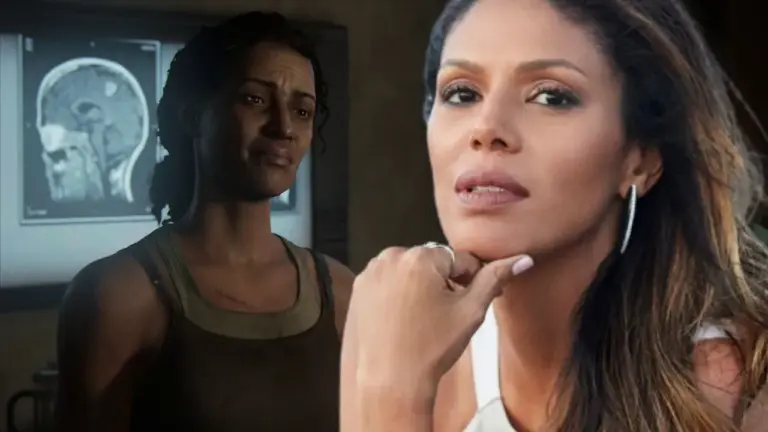


Merle Dandridge: The Only Actor to Play the Same Role in Both Game and Show
When HBO’s The Last of Us premiered in January 2023, longtime players noticed something no other prestige adaptation had tried. The woman running the Fireflies on Sunday nights was the same woman who had led them on PlayStation in 2013.
Merle Dandridge was not just reprising a voice. She was bringing back a character she had already lived through years of performance capture, rewrites, and fan debate. At the time Season 1 aired, she was the only actor from the games to play the same character in the series. Other familiar names, like Troy Baker and Ashley Johnson, appeared in different roles.

By 2025, Jeffrey Wright would join her in that club as Isaac for Season 2. Even so, Dandridge remains the first and defining example of a performer carrying the exact same character from controller to cable.
Her path to that point did not start in Hollywood. It started on a U.S. Air Force base in Japan.
From Okinawa to Nebraska: Early life and training
Merle Dandridge was born on May 31, 1975, in Okinawa, Japan. Her father was an African‑American U.S. servicemember from Memphis. Her mother was from Okinawa and of Korean and Japanese heritage. That mixed background, and the constant movement that comes with military life, shaped her early years.
She spent time at Beale Air Force Base near Sacramento before her family settled at Offutt Air Force Base in Bellevue, Nebraska. There, she attended Papillion La Vista High School and threw herself into theatre classes and productions. Local profiles later noted that Nebraska audiences inducted her into a hometown Hall of Fame, where she has returned for workshops and arts‑education events.
After high school, she headed to Chicago. Dandridge trained at the Theatre Conservatory at Roosevelt University, now the Chicago College of Performing Arts. That formal conservatory training would become the backbone of a career that moved fluidly between stage, screen, and eventually the motion‑capture volume.
Broadway first: Aida, Rent, Spamalot and a Grammy nod
Before most gamers ever heard her voice, Broadway fans knew Dandridge from a string of major productions.
Across the 2000s and 2010s, she appeared in:
- Jesus Christ Superstar in ensemble roles, including Soul Girl and Disciple
- Aida in the title role
- Rent as Joanne
- Spamalot as the Lady of the Lake
- Disney’s Tarzan as Kala in the original 2006 Broadway production
In 2017, she joined the Broadway revival of Once on This Island as Papa Ge, the demon of death. That casting was notable on its own. She became the first woman to play Papa Ge on Broadway, taking on a traditionally male role and reshaping it.
The revival did not just win fans. Its cast recording was nominated for Best Musical Theater Album at the 61st Annual Grammy Awards, held on February 10, 2019. Merle Dandridge was one of the principal soloists listed on that nomination, alongside performers such as Hailey Kilgore and Lea Salonga. Broadway outlets have accurately billed her as a “Grammy Award nominee” ever since.
By the time HBO called about The Last of Us, Dandridge had already logged thousands of hours onstage. She knew how to project to the back row, sustain a role eight shows a week, and track a character’s emotional arc in her body as much as in her voice. Those skills would soon find an unexpected outlet in video games.
Into game worlds: Alyx Vance and a BAFTA win
In the mid‑2000s, Dandridge’s career took a different kind of turn. Valve cast her as Alyx Vance in Half‑Life 2 and its episodic follow‑ups, giving her a prominent role in one of the era’s most acclaimed PC games. That performance introduced her to a large new audience of players.
Over the next decade, she built a quiet but significant list of game credits. She voiced characters in Dota 2 and appeared in Uncharted 4: A Thief’s End. Then, in 2015, she anchored an entire game almost alone.
Everybody’s Gone to the Rapture, developed by The Chinese Room and released for PlayStation 4 on August 11, 2015, is built around her performance as Katherine “Kate” Collins. Kate is a scientist in a rural English village, trying to understand an otherworldly event that is wiping out humanity. The story is delivered through monologues, snippets of conversation, and audio logs. Dandridge’s voice has to carry much of the game’s emotional weight.
At the 12th British Academy Games Awards in 2016, that work earned the industry’s top recognition. Dandridge won the BAFTA Games Award for Performer for Everybody’s Gone to the Rapture. For context, this is the same institution that hands out BAFTAs for film and television. The award put her among the first wave of game performers treated with the same seriousness as screen actors.
The role is worth mentioning in a Last of Us context for another reason. Kate Collins is also a scientist making ethically fraught decisions near the end of the world. Years before HBO shot the Saint Mary’s Hospital sequence, Dandridge was already playing a character wrestling with the costs of “saving” humanity.
Television lead: Greenleaf to Station 19
While game work continued, Dandridge also built a substantial television résumé.
From 2016 to 2020, she starred as Grace Greenleaf in the OWN drama Greenleaf. She played a journalist and pastor’s daughter returning to her family’s Memphis megachurch, investigating secrets that threaten to tear it apart. That series ran for five seasons and put her at the center of a primetime ensemble.
She followed that with roles in:
- The Flight Attendant (HBO Max, 2020) as Kim Hammond
- Truth Be Told (Apple TV+) as Zarina Killebrew
- Station 19 (ABC) as fire chief Natasha Seo‑Yeon Ross, a series regular beginning in 2022
Earlier, she had recurring roles on Sons of Anarchy, The Night Shift, and Star‑Crossed. By the time The Last of Us went into production, she was not a niche “voice actor” pulled into live action for a stunt. She was a working TV lead who also happened to have a decade of experience inside motion‑capture suits.
In February 2025, even while the HBO series pushed ahead, she returned to Broadway. On February 18, 2025, Dandridge joined the cast of Hadestown at the Walter Kerr Theatre as Persephone. Broadway.com’s casting announcement again highlighted her as a Grammy nominee and listed her earlier credits in Rent, Aida, Spamalot, and Once on This Island. She was now balancing a lead role in a Tony‑winning musical with a high‑profile TV franchise.
Becoming Marlene in the games
For The Last of Us players, Merle Dandridge first appeared not on screen, but in polygons.
Naughty Dog’s original game released on June 14, 2013, for PlayStation 3. In it, Dandridge played Marlene, the weary, driven leader of the Fireflies. The group opposes the military government known as FEDRA and believes it might be able to create a vaccine against the Cordyceps infection.
Early in the game, a wounded Marlene hires Joel and Tess to smuggle “cargo” out of the Boston quarantine zone. That cargo turns out to be Ellie. The story eventually takes Joel and Ellie to Saint Mary’s Hospital in Salt Lake City, where Firefly doctors prepare to operate on Ellie’s brain. The surgery might produce a cure, but it will kill her. Marlene authorizes the procedure.
Joel refuses. In the game’s climactic sequence, he kills the Firefly security team, the lead surgeon, and several staff members. In the parking garage, Marlene confronts him and tries to convince him to reconsider. He shoots her once in the side, then kills her with a final shot when she pleads for her life.
Across all of this, Dandridge was not just in a recording booth. She performed Marlene’s body and face through motion capture. In later interviews, she said she was drawn to the character’s integrity and moral conflict. She has described Marlene as a woman facing her “worst nightmares” while clinging to a sense of duty.
When The Last of Us Part II arrived on June 19, 2020, for PlayStation 4, Dandridge returned. The sequel uses flashbacks to the hospital and expands on the fallout from Joel’s decisions. For Dandridge, that meant revisiting scenes she had first played years earlier and deepening them under new context.
“She never really left me,” she said later, talking about Marlene. By the time HBO called, Dandridge had been living with the character for close to a decade.
From mocap volume to HBO set
HBO and Max aired Season 1 of The Last of Us from January 15 to March 12, 2023. Before the premiere, trade outlets underlined a distinctive bit of casting: Merle Dandridge would reprise Marlene, making her the only actor at that point to play the same character in both the games and the show. Troy Baker, Ashley Johnson, and Jeffrey Pierce also appeared, but in new roles.
For Dandridge, the shift from motion‑capture stage to full physical set was still jarring. She revisited the game before filming but quickly discovered that seeing the sets built out changed her internal map. Years of imagining tight hallways and grey mocap cubes gave way to full hospital corridors, Boston streets, and Firefly command rooms.
In interviews, she has talked about feeling “a little discomfort at first,” then quickly settling. One key difference actually helped. A decade had passed since she first auditioned for Marlene. When HBO finally rolled cameras, Dandridge felt she had “aged into” the character. The woman we meet in the series carries twenty years of leadership in a collapsing world, and Dandridge felt that weight differently at 47 than she had in her 30s.
She also noted a deliberate change in physicality. Game‑Marlene could be more overtly dynamic. Live‑action Marlene, in her words, held a “heavier stillness,” a sense that every choice scraped away another layer of her humanity.
On set, seeing Marlene’s costume for the first time was unexpectedly emotional. For nearly ten years, Dandridge had known the Firefly leader as a digital model. Walking into hair and makeup and then into a room full of extras in uniforms and gear finally closed a circle that started on a motion‑capture stage.
Filling in the gaps: Anna, the hospital, and the cost of hope
The HBO series gave Dandridge something she never had in the first game: scenes that had previously existed only as backstory.
The Season 1 finale opens with a flashback not present in the original 2013 release. We meet Anna, Ellie’s mother, heavily pregnant and fleeing infected in a farmhouse. Anna is played by Ashley Johnson, the original Ellie from the game. When Anna is bitten during labor, she lies to Marlene about when it happened and makes her promise to protect the baby.
The scene ends with Marlene forced to kill her best friend moments after taking Ellie into her arms. Dandridge has called Anna “the last vestige” of Marlene’s old life. Filming that moment, she said, “just wrecked” her. It gave concrete shape to the grief and responsibility she had been playing for years in more abstract ways.
Later in the episode, the hospital confrontation plays out in live action. Marlene explains the surgery and insists there is no other choice. She presents Ellie as “a beacon of hope,” a chance for humanity to have a future. Dandridge has emphasized that Marlene is not making this decision lightly. In her view, the choice comes at “a great, great cost” to Marlene personally.
Then Joel makes his own choice. The series matches the game beat for beat: the escape, the elevator, the bloody march through Firefly soldiers, and finally the parking‑garage execution. Dandridge has called this whole sequence a “catalyst moving forward” for the story, because it sets up the rift between Joel and Ellie that drives Part II.
She believes Ellie “knows he’s lying” in that final truck scene. The shadow of Marlene, and the hospital, hangs over every conversation that follows.
For viewers and players, Dandridge’s continuity between game and show changes how those moments land. When the same face and voice plead with Joel in both versions, does his decision to kill her feel colder? Does seeing Marlene execute Anna, at Anna’s own request, alter how we judge her later willingness to sacrifice Ellie?
Those are the kinds of questions Dandridge has spent more than ten years sitting with, on soundstages and on set.
What her dual casting says about games as storytelling
Dandridge has been clear about one hope for the HBO series. She wants television audiences to recognize that the emotional stakes in modern games are serious. In interviews, she has pushed back against the idea that video games are still “Frogger and Asteroid,” pointing instead to “deep, emotional, visceral, important human stories” she and her colleagues have told in interactive form.
Her own résumé backs that up. A BAFTA Games Award for Everybody’s Gone to the Rapture. Central roles in The Last of Us and The Last of Us Part II. Now, the same character brought to life in one of HBO’s flagship dramas.
By 2025, she is no longer entirely unique. Jeffrey Wright, who voiced Washington Liberation Front leader Isaac in The Last of Us Part II, reprises the role in Season 2. His casting confirms that Dandridge was not an experiment, but the start of a pattern. When a performance works, newer adaptations are willing to keep it intact across mediums.
Still, she retains a special place in this franchise’s history. She was the first to make that jump with the same character, and the only one to do it in Season 1, when audiences were still testing whether a game story could hold a Sunday‑night slot beside long‑running prestige dramas.
What Happens Next
As of December 2025, The Last of Us has completed two seasons on HBO and Max. Season 2, which aired from April 13 to May 25, 2025, began adapting The Last of Us Part II and moved the story five years ahead to Jackson, Wyoming. HBO renewed the series for a third season in April 2025. Network leaders have suggested that continuing the Part II story may require a longer Season 3 or even a fourth season, with Casey Bloys indicating that new episodes are not expected until 2027.
Marlene herself is dead in both game and show timelines, but Dandridge’s work continues to echo through every argument about what Joel did, what Ellie suspects, and what “the greater good” means in this world. Offscreen, she has kept her ties to theatre strong, serving on the board of the Geffen Playhouse in Los Angeles and supporting organizations like Harvest Home LA, which assists homeless pregnant women. On Broadway, she is currently belting her way through Hadestown as Persephone.
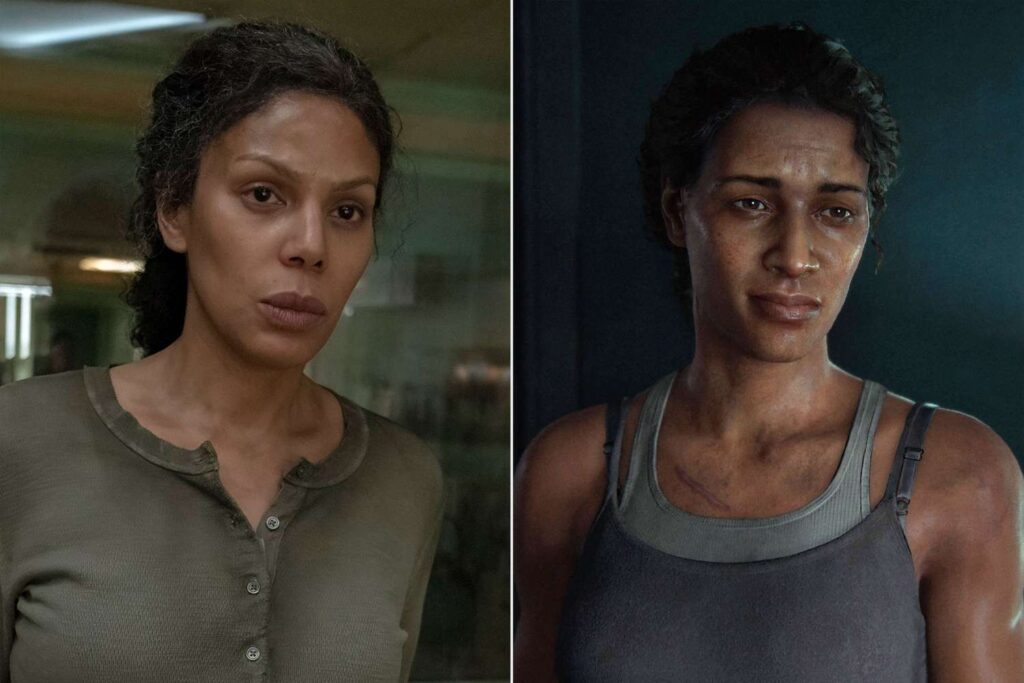
In a decade, Dandridge has taken Marlene from a grey motion‑capture stage to a BAFTA stage and then to HBO’s Sunday‑night lineup. Along the way, she has quietly answered a question that once hovered around every game adaptation: Can you treat a video game character with the same continuity and respect you give a film or television icon?
In her case, the answer is already on record. It sounds like Marlene.